I hate grafting pieces of knitting. If a pattern is written to be knit as separate pieces, such as a front and back, I will convert it to be in the round with as few seams as possible. The act of threading a tapestry needle and running yarn through my stitches is tedious and always feels synthetic. It takes part of the magic away.
Knitting without seams seems to me to be much harder and more creative. You have to find ways to grow the fabric organically to create the construction that you want. That is the magic of knitting to me, to create a novel and pleasing construction using only a piece of yarn and two knitting needles. A seam marks where my hand knitted garment became a sewn piece reminiscent of mass manufacture. (Yes, I know many fabrics are knit!)
Thus, imagine my surprise when I read someone's comment that seamless knitting is less desirable when it comes to clean construction. In the comment section of Franklin Habits review of Amy Herzog's books "At Last: How to Knit a Good Fit", Sara wrote: "All top European Knitwear designer garments are seamed. In the round is for people who don’t enjoy professional finishing and are quite happy to cut corners."
Actually, Sara wrote this comment to agree with another Sara who was replying to a Sarah's comment.
Actually, Sara wrote this comment to agree with another Sara who was replying to a Sarah's comment.
 |
| Sara(h) isn't quite sure how she feels about seams either |
What? Seams add structure and support to make a more flattering garment? I'm cutting corners? Yes, yes, I am too lazy to do more work after the knitting - but I never understood why anyone would do more work if they didn't have to!
Regardless of Sara's true feelings, I am now feeling very insecure about my personal knitting preferences. I love to knit a top-down or raglan-style yoke, like in the photo below of my feathernest raglan by Amy Miller. These new-found perspectives of construction and fit cause me to question my previous die-hard, why-would-you-ever-knit-front-and-back-separate attitude.
Regardless of Sara's true feelings, I am now feeling very insecure about my personal knitting preferences. I love to knit a top-down or raglan-style yoke, like in the photo below of my feathernest raglan by Amy Miller. These new-found perspectives of construction and fit cause me to question my previous die-hard, why-would-you-ever-knit-front-and-back-separate attitude.
 |
| It's not even finished and it looks like a sweater |
Then, Nicky Epstein's talk at the Atlanta Knitting Guild meeting last night convinced me to give seams a chance. Nicky's books are all about knitting multiple pieces and joining them together. Her garments look pretty cool, too.
Her book, "Knitting in Circles", is all about constructing garments by joining circles. The dress in the image below is quite beautiful, and it's made from very many lace circles. Nicky told us that each circle takes a few hours to make. It took so long to make the dress, and the knitters were so frustrated, that they actually stopped and ended up just adding a stockinette stitch portion in the back. (so even professionals get tired of all those pieces!) I actually got to see this dress in person at the event, and it's wow.
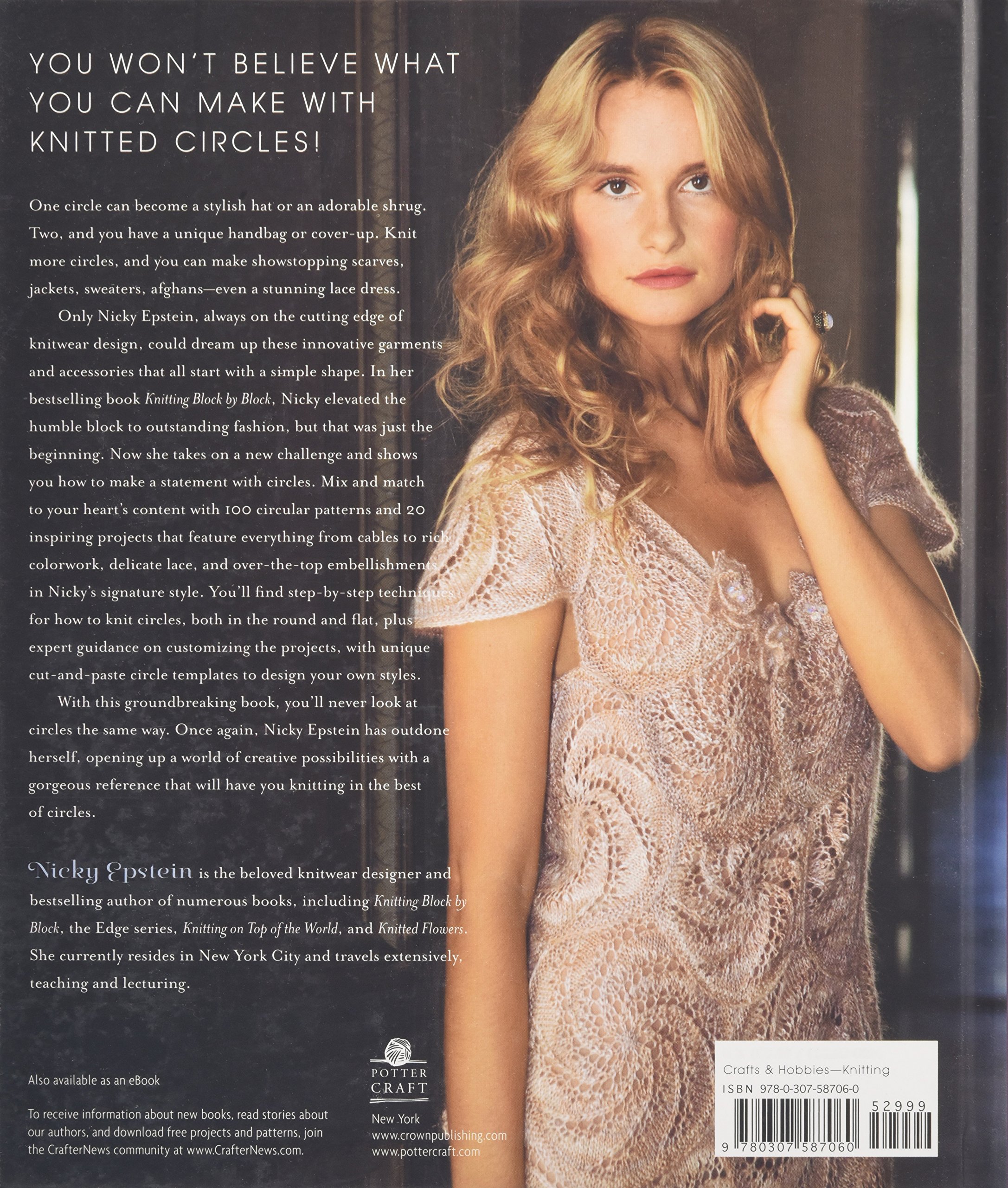 |
| So many hours of work. [photo from amazon] |
Maybe there is something to this knitting in pieces thing?
Comments
Post a Comment